The owner of a restaurant opens the monthly P&L, looks at sales, skips down to the bottom line and then closes the P&L.
Do these sound like familiar?
If only those two numbers are examined, the report’s true value is lost.
A good restaurant bookkeeping system should not increase the dependence of restaurant owners on accountants. They should have confidence in their own numbers. It’s not required to sit the night completing invoices or knowing every accounting principle. However, you must understand why profit moved, what happened to costs for food and labor, and which questions deserve consideration next week.
Bookkeeping Chef’s philosophy is to automate bookkeeping tasks that don’t require the time of restaurant owners, while providing the restaurant owners with better financial data they can utilize.
You Should Start By Looking at the Weekly Numbers and not just month-end numbers.
A monthly P&L is crucial, but restaurants don’t operate monthly. This week, the managers plan their work. The chef orders food today. Vendors change prices now.
Bookkeeping Chef offers weekly flash reports on top costs along with monthly financial statements.
Prime cost is the sum of the cost of goods sold as well as labor. Both of these are major areas that can be swiftly moved in restaurants. The Bookkeeping Chef’s information notes that prime costs usually comprise around 60% of restaurant sales.
Take a look at a scenario where sales are barely changing, but prime costs are rising. The percentage doesn’t give the solution. It gives the owner an opportunity to research.
Is the hourly wage increasing? Did you have any overtime? Did food costs change? A vendor invoice seemed unusually large? Has the mix of sales changed?
It’s far more beneficial than discovering the same issue two weeks later.
Automate the repetitive work
DIY bookkeeping doesn’t need to be done manually by transferring POS (point of sale) totals onto spreadsheets.
Automating the restaurant’s bookkeeping process will eliminate repetitive data movement. The service is connected to POS systems, QuickBooks, vendors platforms, recipe and inventory management, payments instruments.
Automation isn’t the only goal.
This reduces the amount of manual data entry. Also, it keeps financial records updated so owners are able to focus on looking over information instead of collecting it.
This creates a new model of bookkeeping that restaurants use: technology is able to handle more mechanical aspects, while the restaurant owner is involved in the financial aspects.
Learn to ask the P&L Better Questions
A P&L can be a lot less intimidating when you stop treating it like an accounting test.
Begin by studying the sales. Then, take a look at cost of production. Compare the performance of food and beverages. Take into consideration the labor. See the work.
In addition, it is important to compare timeframes.
If the sales rise but the profits do not, there is a change between the two. If food costs has increased, find out what was happening operationally. Compare the staffing levels and sales activities if the labor percentages have changed. Investigate if a number seems strange, instead of assuming that the restaurant was in poor times.
Bookkeeping Chef provides monthly P&Ls which are completed in five days. Owners are able to review the company’s performance without having to wait for months to receive financial statements.
For owners searching bookkeeping restaurant solutions, speed is useful but understanding is the bigger objective.
It’s not necessary to DIY everything.
There is a happy balance between hiring someone to manage all of your financial tasks and being your own full-time accountant.
You could be a part of a business owner and not be required to complete all accounting duties by hand.
The process could be as simple as using automated system connections in order to ensure that the information is flowing. Or it could be as extensive and intricate an analysis of the monthly P&L or a look at a weekly Prime-cost Report.
Restaurant bookkeeping services that specialize in restaurants can help owners comprehend the significance of reports by arranging the books and keeping them in order.
However, this does not mean the bookkeeper will be able to perform every bookkeeping task.
It’s an owner who can have a conversation with an P&L and have a frank conversation about the business.
The goal is financial independence without reporting
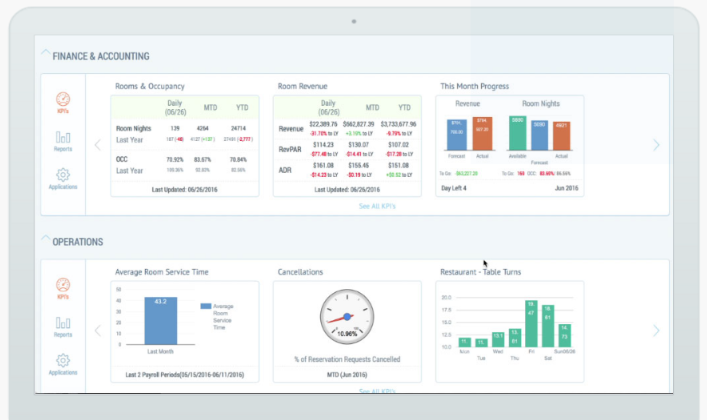
Restaurants already generate enormous quantities of data. A different dashboard won’t be as effective.
When an operator is able examine the weekly report on prime costs and discover that something is different, they can then look into their P&L to determine what requires additional examination.
Bookkeeping Chef’s approach integrates automated bookkeeping for restaurants weekly reports, monthly P&Ls, and special financial assistance to restaurants in order to enable this.
Automate the repetitive work. Check your prime costs every week. Learn to speak the language of your P&L.
You don’t need to be an accountant.
It is best to become a restaurant owner who is aware of the financials of your own restaurant.